
Dictionnaire Larousse français
Editions LarousseBooks & Reference
4.09.00 Reviews
- Version
- 3.3
- Installs
- 10.00K
- Age Rating
- Everyone
Screenshots
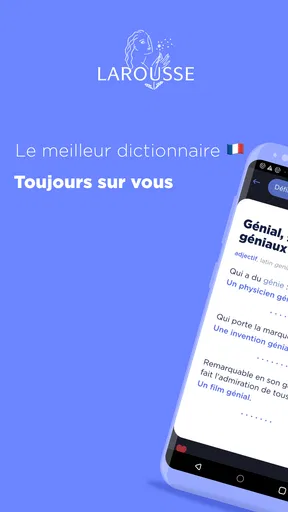
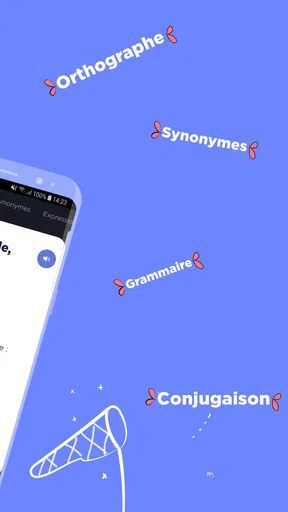
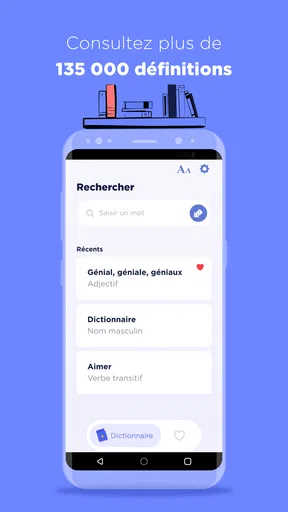
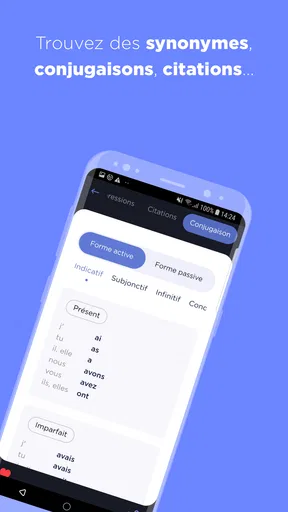
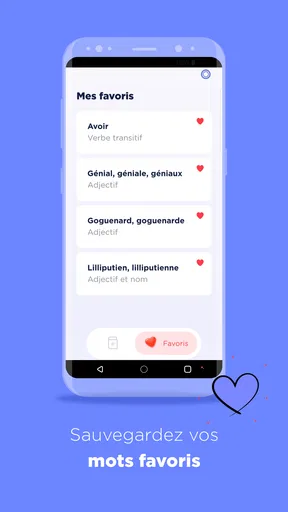
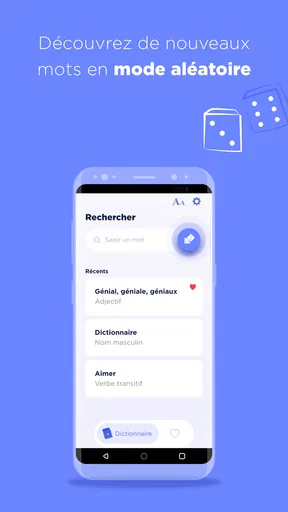
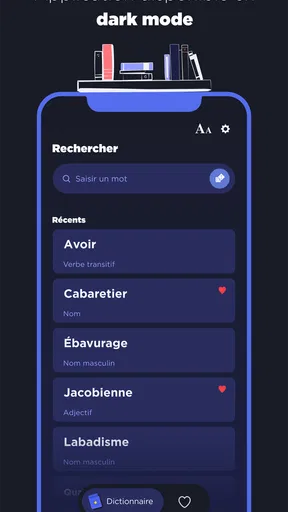
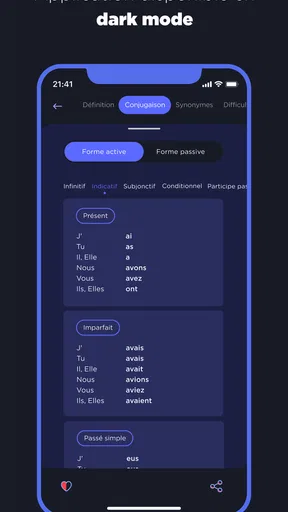
Our Review of Dictionnaire Larousse français
 Analysis by Appyee
I use Dictionnaire Larousse français as a reference when I want to check a French word rather than rely on a quick guess or a loose translation. It is a paid Books & Reference app from Editions Larousse, and its strongest appeal is straightforward: it brings dictionary lookups, spelling help, synonyms, and grammar support together in one place. That makes it useful for learners, writers, and anyone who regularly reads or works in French.
A practical starting routine
My most reliable way to use a dictionary app is to begin with the exact word or verb I have in front of me, then follow the result only as far as the task requires. If I am writing a message, I check the spelling and meaning first; if the word is a verb, I also check its form before putting it into a sentence. That small habit helps prevent a common mistake: finding the right word but using it in the wrong grammatical shape.
For example, imagine I am replying to a French-speaking colleague and want to say that I received a document. I can look up the verb I intend to use, check its conjugation, and then consider whether a listed synonym fits the tone of my sentence. I would still read the complete sentence aloud and use my judgement, but the dictionary gives me a dependable place to resolve the basic questions before I send it.
What to check before relying on it
The app is aimed at French reference work, so I would treat it differently from a general translation tool. A translator is often faster when I need to understand an entire sentence in another language. A dictionary is better when I want to know what a particular French word means, how it is spelled, or what alternatives may express the idea more precisely.
That distinction matters especially with synonyms. I do not assume that two words listed as alternatives are interchangeable in every sentence. I check the definitions and context, then choose the word that matches the register and meaning I actually need. This is a more careful workflow than copying the first suggested alternative, but it is also where a dedicated reference can be more useful than a one-tap translation.
Before making the app part of a regular routine, I would check how it behaves on the device and in the situations where I expect to use it. The listing identifies version 3.3 and Android 5.1 as the minimum operating-system requirement. The app is rated Everyone, and its price is $6.49, so I would weigh that one-time decision against how often I need a French reference. Its average rating is 4.0 from around 234 ratings, with 9 written reviews; I would read those as a useful snapshot, not as a guarantee that every device or workflow will feel the same.
Faster habits for repeat lookups
When I am reading a French article, I try not to stop for every unfamiliar word. I mark the ones that block the meaning, look those up, and leave minor uncertainties for later. In a writing session, I reverse the process: I check the words that I am about to use, especially verbs and terms for which a near-synonym might change the tone. Keeping those two habits separate avoids turning reading into a string of interruptions.
A second useful pattern is to treat a lookup as a short decision, not an invitation to browse indefinitely. I start with the spelling, confirm the definition, and then consult grammar or synonyms only if they answer a real question. That keeps a reference session focused. It also makes the app more helpful for quick tasks such as checking a homework answer, polishing a short note, or clarifying one word in a book.
Where a dictionary is not enough
A dictionary can clarify a word without explaining every cultural implication, regional preference, or conversational nuance. If I am preparing a formal letter, studying a difficult text, or choosing wording for a sensitive conversation, I use the entry as a starting point and consider the larger context. For an extended passage, a translation app may be the more convenient first step; for spoken practice, a tutor or a course can explain why a phrase sounds natural in a way a reference lookup cannot.
The same caution applies to grammar. A conjugation result can help me select a verb form, but it cannot decide which tense best expresses what I mean in a particular conversation. I still need to understand the sentence around it. The app is most effective when I use it to verify and refine my French, rather than expecting it to replace learning or make every choice for me.
It is also worth being realistic about the purchase. If I only look up French words once in a while, a free online dictionary may be enough. If I often read, write, or study in French and prefer having a dedicated reference on my phone, paying for this app may make more sense. That is the decision I would make before downloading: not whether a dictionary is useful in theory, but whether I will reach for this one often enough to justify its price.
For a French learner, one particularly helpful use is checking a word encountered in a real sentence and then returning to that sentence instead of memorizing the definition in isolation. I note what the word is doing there, whether it is a verb or another part of speech, and whether a synonym would preserve the same meaning. That simple loop turns a lookup into a small lesson without requiring a separate study session.
The app has reached over 10,000 installs, which suggests that it has found an audience among people looking for a French reference on mobile. I would still choose based on my own needs rather than popularity: the main question is whether I want a focused dictionary and grammar aid, or a broader language-learning tool with lessons and practice activities. Those are different jobs, and this app is best judged by the first one.
It was released on October 29, 2020, and its current version is 3.3. For me, those details are less important than whether the reference answers my everyday questions clearly. I would try a few searches that match my real use—one word whose spelling I often forget, one verb I need to conjugate, and one synonym I am unsure about—before deciding whether its style suits me.
Exploring the Features
First off, the Dictionnaire Larousse français app is your all-in-one French language companion. What I love most is its vast repository of words. We're talking about hundreds of thousands of entries, complete with their meanings, synonyms, and even antonyms. It's like having a French professor in your pocket!
One of the standout features is the conjugation tool. French verbs can be pretty tricky with all those tenses and irregularities. But fear not, this app has you covered. Just type in any verb, and voilà! You get a detailed breakdown of its conjugations across different tenses.
Audio Pronunciations
Now, let’s talk about pronunciation. I don’t know about you, but I’ve always struggled with those subtle French nuances. Thankfully, the app includes audio pronunciations, and they’re not just robotic voices either. You get clear, high-quality recordings that help you nail the accent.
Whether you're a beginner or an advanced learner, hearing the words spoken correctly is a game-changer. It’s like having a native speaker guiding you through the tricky parts.
User Experience and Interface
Let’s be real, no one wants to use an app that feels like it was designed in the ’90s. Fortunately, this isn’t the case here. The interface is sleek and intuitive. Navigating through the different sections is a breeze, and the search function is super responsive. Even if you’re not tech-savvy, you’ll find your way around in no time.
Another cool aspect is the offline mode. If you’re traveling or don’t have access to Wi-Fi, you can still use the essential features without a hitch. It’s perfect for when you’re on the go and need quick translations or definitions.
Extra Goodies
But wait, there’s more! The app also includes cultural insights and language tips. It’s like getting a mini French culture lesson every time you use it. Whether it’s learning about famous French authors or understanding idiomatic expressions, these little nuggets make the learning experience richer and more engaging.
Plus, there are regular updates with new words and phrases, keeping you up-to-date with the ever-evolving French language. It’s not just about learning vocabulary; it’s about staying in the loop with contemporary French.
Final Thoughts
All in all, the Dictionnaire Larousse français app is a powerhouse for anyone serious about learning French. Its comprehensive features, coupled with an easy-to-use interface, make it a top choice among language learners.
Whether you’re a student, a traveler, or just someone who loves French, this app is like having a language school on your phone. So why not give it a try? You might find yourself falling even more in love with the French language, one word at a time.
Ready to take your French skills to the next level? Check out the download links for both Android and iOS and start your linguistic journey today!
Verdict
Strengths of Dictionnaire Larousse français
- Comprehensive French definitions.
- User-friendly interface design.
- Offline access to entries.
- Regular updates with new words.
- Audio pronunciations available.
Limitations of Dictionnaire Larousse français
- Limited to French language only.
- Ads in the free version.
- No English translations.
- Requires in-app purchases for full access.
- Occasional loading delays.
Similar Picks in This Category
View All
Google Play Books & Audiobooks
Google LLC4.7

네이버 - NAVER
NAVER Corp.3.5

Wattpad - Read & Write Stories
Wattpad.com3.7

King James Bible - Verse+Audio
Ozion4.8

Bible Offline-KJV Holy Bible
Bíblia Offline4.9

Amazon Kindle: Reading App
Amazon Mobile LLC4.8
Frequently Asked Questions
What features does the Dictionnaire Larousse français app offer?
The Dictionnaire Larousse français app provides users with a comprehensive French dictionary, including definitions, synonyms, antonyms, and example sentences. It also offers verb conjugations, pronunciation guides, and a history of word searches. The app is designed for both native speakers and learners of French, supporting a deeper understanding of the language.
Is an internet connection required to use the app?
The Dictionnaire Larousse français app offers offline access to its dictionary and conjugation features, making it ideal for users who are on the go or have limited internet access. However, some features like updates or additional content may require an internet connection to download the latest information.
How user-friendly is the Dictionnaire Larousse français app?
The app is designed with a user-friendly interface that allows easy navigation through its features. Users can quickly search for words, access definitions, and explore related terms effortlessly. The intuitive design ensures that both beginners and advanced users can make the most of its comprehensive resources without frustration.
Can the app be used by French language learners?
Yes, the Dictionnaire Larousse français app is an excellent tool for French language learners. It provides detailed explanations, pronunciation guides, and usage examples that aid in understanding and mastering the language. Additionally, its conjugation tools and vocabulary building features are particularly helpful for learners at all levels.
Is there a cost associated with downloading the app?
The Dictionnaire Larousse français app may offer both free and premium versions. The free version typically includes basic dictionary features, while the premium version provides access to an expanded range of tools and content. Users can choose based on their needs and decide if the additional features justify the cost.
